How Customized Hardware Precision Parts Improve Product Reliability
In the modern era of advanced manufacturing, where the margin for error is continually shrinking, the demand for customized hardware precision parts has grown significantly. From aerospace systems and automotive engines to medical equipment and industrial automation, these components play a vital role in ensuring the performance, durability, and reliability of complex systems. This article explores how customized precision parts contribute to improved product reliability and why they have become indispensable across multiple industries.
1. Understanding Customized Hardware Precision Parts
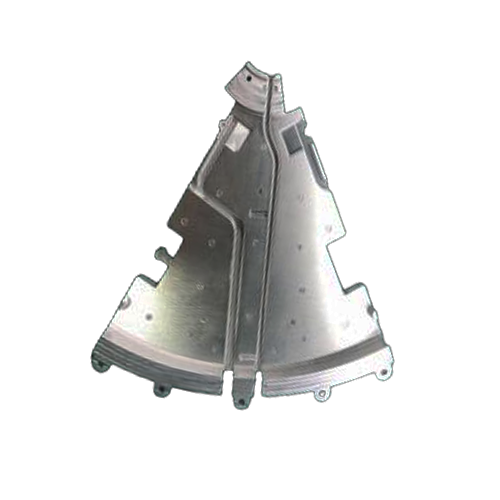
Customized hardware precision parts refer to components that are manufactured to exact specifications using high-precision machining techniques such as CNC turning, milling, grinding, EDM (electrical discharge machining), and more. These parts are not mass-produced but are engineered based on specific requirements including material type, geometry, dimensional tolerance, surface finish, and functional performance.
Unlike generic components, custom precision parts are tailored to fit unique assemblies or functions, ensuring that they integrate seamlessly into larger systems without requiring modification or compromising design intent.
2. Precision Equals Reliability
One of the most significant contributions of customized hardware precision parts to product reliability is the high level of accuracy in their production. Tolerances can be held to within microns, which minimizes variations and mechanical inconsistencies. This results in components that:
Fit perfectly without additional processing
Reduce wear and tear on surrounding parts
Eliminate gaps and misalignments
Improve sealing and structural integrity
These factors directly impact system stability, reducing the likelihood of component failure and extending the overall lifecycle of the product.
3. Material Selection Tailored to Application
Customized parts are often made from materials specifically chosen for the operating environment. For example, high-strength alloys may be used for parts subjected to stress and heat, while corrosion-resistant stainless steel or titanium might be selected for medical or marine applications. The ability to select and process the right material ensures that the part performs reliably under the exact environmental conditions it will encounter.
Key benefits include:
Thermal stability in high-temperature operations
Corrosion resistance in harsh chemical environments
Wear resistance for high-friction applications
Biocompatibility for medical devices
These enhancements dramatically reduce the probability of component degradation or malfunction over time.
4. Improved Mechanical Performance
customized hardware parts are designed with performance in mind. Engineers can optimize the shape, weight, and mechanical properties of each part to meet specific requirements. For example, a lightweight precision-machined titanium bracket can maintain structural strength while reducing the overall mass of a device, which is particularly important in aerospace and motorsports.
Other performance enhancements include:
Load-bearing optimization
Stress distribution for high-impact areas
Vibration resistance and damping
Precision alignment for high-speed applications
Such improvements allow the final product to function consistently and efficiently, even under demanding operating conditions.
5. Fewer Assembly Issues and Faster Integration
Off-the-shelf parts often require adaptation or compromise during assembly, introducing potential points of failure. Customized parts, however, are designed for seamless integration. This results in:
Minimized friction during the assembly process translates to fewer errors, lower rejection rates, and enhanced quality control. Moreover, fast and precise integration means production cycles are shorter, which also contributes to cost-effectiveness.
6. Enhanced Quality Control and Consistency
Manufacturers of customized precision hardware employ advanced quality assurance measures such as coordinate measuring machines (CMM), laser scanners, and digital inspection systems. Each part is inspected to ensure that it meets stringent design criteria, eliminating inconsistencies that could affect reliability.
Reliable quality control practices guarantee that every part delivered is:
Dimensionally accurate
Free from surface defects
Made from verified material grades
Tested for functional performance
With consistent parts, the end product benefits from predictable and stable behavior over time, reducing the likelihood of returns or field failures.
7. Customization for Functional Redundancy and Safety
In safety-critical industries such as aerospace, defense, and medical devices, reliability is paramount. Customized parts allow designers to build in redundancies—meaning even if one component fails, the system can still function safely until maintenance can be performed.
Examples of customized safety features include:
Secondary locking mechanisms in fasteners
Multi-layered shielding in electronic housings
Fail-safe features in actuators or valves
These tailored features ensure maximum uptime and safety compliance.
8. Adaptability to Evolving Designs
As product designs evolve, standardized components may not fit new configurations. Customized precision parts offer flexibility for rapid prototyping, design iterations, and manufacturing scalability. Manufacturers can quickly revise CAD models and produce small batches for testing before final mass production.
This adaptability improves product development cycles and ensures that innovations can reach the market faster without compromising reliability or performance.
9. Reduced Maintenance and Downtime
Components that are precisely matched to their systems experience less operational stress. As a result, they require less frequent maintenance, last longer, and are less likely to fail unexpectedly. This contributes to:
For industrial users, these savings can be significant, especially in sectors like heavy equipment, renewable energy, or telecommunications.
10. Supporting Industry-Specific Compliance and Standards
Many industries have strict regulations related to reliability and performance. Customized precision parts can be manufactured to meet these standards, whether it’s ISO, AS9100 (aerospace), FDA (medical), or IATF 16949 (automotive). This compliance ensures:
When parts are designed with specific industry standards in mind, the final product gains a competitive edge in the market.
Conclusion
Customized hardware precision parts have a profound impact on product reliability. By offering superior fit, optimal material selection, and tailored performance features, these parts ensure that systems operate consistently, safely, and efficiently across various applications. As industries push for higher performance and tighter tolerances, the importance of customization in component design and manufacturing will only continue to grow.
Investing in customized precision components is not just about quality—it's about securing long-term reliability, reducing risks, and building a reputation for excellence.

 Español
 Portugues
 Pусский
 Français
 Deutsch
 日本語
 한국어
 العربية
 Italiano
 Nederlands
 Ελληνικά
 Svenska
 Polski
 ไทย
 Türk dili
 हिन्दी
 Indonesia
 Melayu
 Tiếng Việt
 中文
 dansk
 Magyar
 қазақ
 বাংলা
 עִברִית
 čeština
 Soomaali
 မြန်မာ
 فارسی
 українська
 norsk
 Gaeilge
 беларускі
 Română
 Filipino
 lietuvių
 македонски
 Suomalainen
 slovenský
 o'zbek
 اردو
 հայերեն
 Igbo
 български
 سنڌي
 සිංහල
 Hrvatski
 íslenskur
 Zulu South Africa
 Afrikaans isiXhosa
 ಕನ್ನಡ
 Indonésia Sunda
 Кыргызча
 тоҷикӣ
 Србија
 Hawaii
 Cebu
 नेपाल
 latvija
 slovenija
 kiswahili
 ਪੰਜਾਬ
 پښتو
 Azərbaycan
 አማራ
 Shqipëria
 Chicheva
 ଓଡିଆ
 Setswana
 Afrikaans
 Aymara
 Башҡорт
 Türkmenler
 ትግሪኛ
 Afaan Oromoo
 অসমীয়া
 Kinyarwanda
 Ilocano
 Wolof
 अवधी
 Oluganda
 Bikol
 Fulɓe
 Kikongo
 Lingala
 རྫོང་ཁ
 Santali
 Аҧсуа
 Чӑваш
 Batak Karo



 Phone
Comment
(0)