Top Benefits of CNC precision parts Processing for Modern Industry
Introduction
In today's fast-paced and highly competitive manufacturing environment, precision, speed, and consistency are paramount. The advent of CNC precision parts processing has revolutionized how industries approach component fabrication. CNC (Computer Numerical Control) machining enables the automated production of highly accurate parts, significantly enhancing manufacturing capabilities.
This article delves deeply into the top benefits of CNC precision parts processing and explains why modern industries—from automotive to aerospace, medical devices to electronics—rely heavily on this technology. We will explore how CNC machining improves quality, efficiency, flexibility, and cost-effectiveness, enabling companies to meet evolving market demands and stringent standards.
1. Unmatched Precision and Consistency
1.1 High Accuracy Manufacturing
One of the primary benefits of CNC precision parts processing is its ability to produce parts with extremely tight tolerances. CNC machines operate based on computer-generated codes, eliminating human error inherent in manual machining. This ensures:
Dimensional accuracy often within microns
Consistent replication across large production runs
High-quality surface finishes
Industries such as aerospace, medical devices, and automotive rely on these precision levels for safety-critical components.
1.2 Repeatability
CNC machining guarantees that every part produced matches the exact specifications of the original design. This repeatability reduces the risk of defects and variations, which is critical for assembly line efficiency and product reliability.
2. Enhanced Manufacturing Efficiency
2.1 Automation and Reduced Labor Dependency
CNC machines automate many machining processes, significantly reducing the need for manual intervention. This lowers labor costs and reduces the potential for operator errors. Automated tool changes, part loading, and unloading further streamline production.
2.2 Faster Production Cycles
By automating machining operations and reducing setup times, CNC machining shortens lead times. Multi-axis CNC machines can complete complex parts in a single setup, eliminating multiple repositionings and increasing throughput.
2.3 Minimization of Waste
The precision of CNC machining ensures optimal material usage. Accurate cutting and minimal errors lead to less scrap, reducing raw material costs and environmental impact.
3. Flexibility in Design and Production
3.1 Complex Geometries and Intricate Details
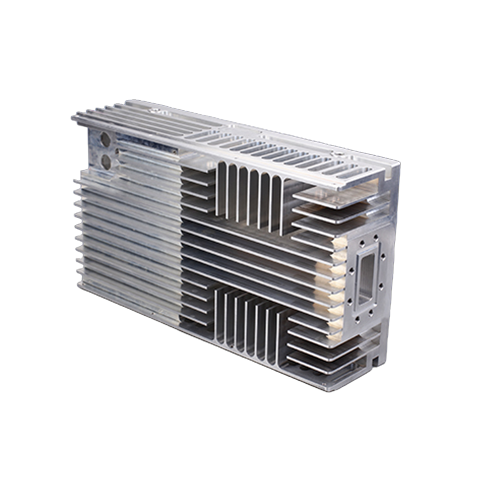
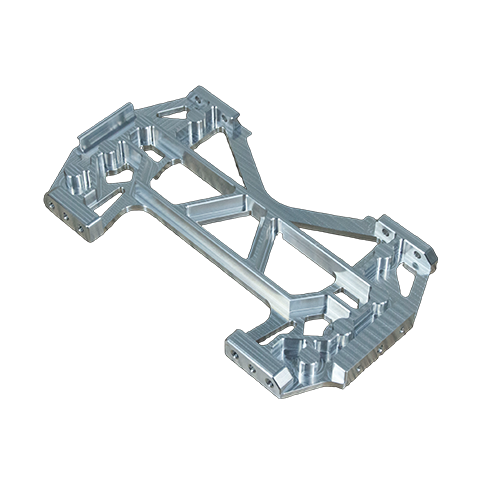
CNC precision machining can handle complex shapes and detailed features that would be challenging or impossible with traditional methods. This capability enables innovative designs and customized solutions across industries.
3.2 Rapid Prototyping and Small Batch Production
CNC machines facilitate quick design changes and efficient production of prototypes or small batches without requiring costly tooling changes, supporting agile development and market responsiveness.
3.3 Wide Range of Materials
CNC machining processes a broad spectrum of materials, including metals (aluminum, titanium, stainless steel), plastics, composites, and specialty alloys, offering versatility to manufacturers.
4. Improved Product Quality and Reliability
4.1 Tight Quality Control
CNC machining integrates seamlessly with digital inspection tools and in-process monitoring systems, enabling real-time quality assurance and reducing defective output.
4.2 Enhanced Surface Finish
Advanced tooling and controlled machining parameters deliver superior surface finishes, essential for functional and aesthetic requirements in many applications.
4.3 Longevity and Performance
Parts produced with CNC precision machining exhibit better dimensional stability and performance, leading to longer service life and reduced maintenance costs.
5. Cost-Effectiveness and Return on Investment
5.1 Reduced Operational Costs
Automation lowers labor expenses and minimizes rework, saving money throughout the production cycle.
5.2 Efficient Use of Materials
Precise machining reduces scrap and optimizes raw material use, contributing to cost savings.
5.3 Scalability and Volume Flexibility
CNC machining supports both low-volume custom parts and high-volume production, allowing businesses to scale efficiently without significant additional investment.
6. Safety and Workplace Benefits
6.1 Enhanced Operator Safety
Automation reduces manual handling and exposure to hazardous machining processes, lowering workplace injuries.
6.2 Consistent Work Environment
CNC machines provide controlled and predictable operations, reducing stress and fatigue for operators and improving overall workplace conditions.
7. Integration with Modern Manufacturing Technologies
7.1 CAD/CAM Integration
CNC machining leverages CAD (Computer-Aided Design) and CAM (Computer-Aided Manufacturing) software for seamless design-to-production workflows, reducing errors and enhancing efficiency.
7.2 Industry 4.0 and IoT Compatibility
Modern CNC machines are often equipped with IoT connectivity and real-time monitoring capabilities, facilitating predictive maintenance and smart manufacturing practices.
7.3 Hybrid Manufacturing
CNC machining can be combined with additive manufacturing techniques, such as 3D printing, to produce complex parts with enhanced performance and reduced lead times.
8. Environmental Sustainability
CNC precision machining’s ability to minimize waste and optimize energy use contributes to sustainable manufacturing goals. Efficient processes reduce carbon footprint and material consumption.
9. Industry-Specific Benefits
9.1 Automotive Industry
CNC machining enables the production of high-precision engine components, transmission parts, and safety-critical elements, meeting stringent regulatory and performance standards.
9.2 Aerospace Industry
CNC precision parts are essential for manufacturing turbine blades, structural components, and avionics hardware that require extreme precision and durability.
9.3 Medical Device Manufacturing
The medical sector benefits from CNC machining’s ability to produce small, complex, and biocompatible parts such as implants and surgical instruments with high accuracy.
9.4 Electronics and Telecommunications
CNC machining produces precision housings, connectors, and cooling components essential for miniaturized and high-performance electronics.
10. Challenges and Considerations
While CNC machining offers numerous benefits, manufacturers must consider:
Initial investment costs in CNC equipment and training
Programming complexity requiring skilled personnel
Maintenance and calibration needs to ensure accuracy
Proper planning and investment in training and technology mitigate these challenges.
Conclusion
CNC precision parts processing provides modern industries with unparalleled advantages in precision, efficiency, flexibility, and cost savings. Its ability to automate complex machining tasks, handle diverse materials, and integrate with advanced manufacturing technologies positions CNC machining as a cornerstone of contemporary manufacturing.
Industries that adopt CNC precision machining can expect improved product quality, faster time-to-market, and greater operational agility, essential for staying competitive in today’s global market.

 Español
 Portugues
 Pусский
 Français
 Deutsch
 日本語
 한국어
 العربية
 Italiano
 Nederlands
 Ελληνικά
 Svenska
 Polski
 ไทย
 Türk dili
 हिन्दी
 Indonesia
 Melayu
 Tiếng Việt
 中文
 dansk
 Magyar
 қазақ
 বাংলা
 עִברִית
 čeština
 Soomaali
 မြန်မာ
 فارسی
 українська
 norsk
 Gaeilge
 беларускі
 Română
 Filipino
 lietuvių
 македонски
 Suomalainen
 slovenský
 o'zbek
 اردو
 հայերեն
 Igbo
 български
 سنڌي
 සිංහල
 Hrvatski
 íslenskur
 Zulu South Africa
 Afrikaans isiXhosa
 ಕನ್ನಡ
 Indonésia Sunda
 Кыргызча
 тоҷикӣ
 Србија
 Hawaii
 Cebu
 नेपाल
 latvija
 slovenija
 kiswahili
 ਪੰਜਾਬ
 پښتو
 Azərbaycan
 አማራ
 Shqipëria
 Chicheva
 ଓଡିଆ
 Setswana
 Afrikaans
 Aymara
 Башҡорт
 Türkmenler
 ትግሪኛ
 Afaan Oromoo
 অসমীয়া
 Kinyarwanda
 Ilocano
 Wolof
 अवधी
 Oluganda
 Bikol
 Fulɓe
 Kikongo
 Lingala
 རྫོང་ཁ
 Santali
 Аҧсуа
 Чӑваш
 Batak Karo



 Phone
Comment
(0)