Carbon Fiber Composite Parts for Drones: Enhancing UAV Performance with Advanced Materials
Introduction
Unmanned Aerial Vehicles (UAVs), commonly known as drones, have become ubiquitous across industries such as agriculture, surveillance, filmmaking, delivery, and environmental monitoring. As drone technology advances, the demand for lightweight yet strong components has intensified. Carbon fiber composite parts have emerged as a leading solution, offering unmatched strength-to-weight ratios, superior stiffness, and exceptional durability. This comprehensive guide explores carbon fiber composites' role in drone manufacturing, covering material properties, manufacturing processes, advantages, applications, and future trends.
Understanding Carbon Fiber Composites
What Are Carbon Fiber Composites?
Carbon fiber composites are engineered materials made by embedding thin, strong carbon fibers into a resin matrix, typically epoxy. This combination yields a material that leverages carbon fiber’s high tensile strength and stiffness with the resin’s binding and protective properties.
Key Characteristics
Lightweight: Carbon fiber composites are significantly lighter than metals such as aluminum or steel, reducing drone weight and improving flight time.
High Strength and Stiffness: They possess excellent tensile strength and rigidity, crucial for structural integrity and aerodynamic performance.
Corrosion Resistance: Unlike metals, carbon fiber composites resist corrosion and chemical degradation, increasing durability.
Vibration Damping: The material's inherent damping reduces vibrations, enhancing the stability of sensitive drone sensors and cameras.
Thermal Stability: Carbon fiber composites maintain performance across a broad temperature range, suitable for diverse environments.
Advantages of Carbon Fiber Composite Parts in Drone Manufacturing
Weight Reduction and Flight Efficiency
Reducing drone weight is essential for maximizing flight duration and payload capacity. Carbon fiber composites typically weigh 60-70% less than aluminum while offering superior strength. This weight advantage enables drones to fly longer on the same battery charge and carry heavier or additional equipment.
Superior Mechanical Performance
Carbon fiber composite parts withstand mechanical stresses during takeoff, flight maneuvers, and landing impacts. Their high strength-to-weight ratio allows drone manufacturers to design thinner, more aerodynamic structures without compromising safety or rigidity.
Enhanced Aerodynamics
Smooth surface finishes achievable with carbon fiber composites reduce aerodynamic drag. Custom molding techniques enable complex shapes that optimize airflow, improving drone stability and control.
Environmental Resistance and Durability
Carbon fiber composites resist moisture, UV radiation, and temperature fluctuations better than many traditional materials. This resistance extends drone lifespan and lowers maintenance needs, especially in harsh operational environments like coastal or industrial zones.
Vibration and Noise Reduction
The damping properties of carbon fiber reduce vibrations transmitted through the drone frame. This is critical for aerial photography and surveillance drones, as it minimizes image blur and enhances sensor accuracy. Additionally, vibration reduction contributes to quieter drone operation, which is beneficial in urban and wildlife-sensitive applications.
Common Carbon Fiber Composite Parts for Drones
Airframes and Frames
The airframe forms the drone’s backbone, supporting all components. Carbon fiber frames provide structural strength with minimal weight, critical for maneuverability and endurance. Many racing and professional drones use carbon fiber frames for their rigidity and resilience.
Rotor Blades and Propellers
Carbon fiber rotor blades combine lightness and stiffness to improve aerodynamic efficiency and reduce fatigue. They maintain shape under high rotational speeds, ensuring stable lift and thrust.
Landing Gear
Durable carbon fiber landing gear absorbs impact forces during landing while keeping weight low. Custom geometries can be molded to enhance shock absorption and protect delicate electronics.
Camera and Sensor Mounts
Mounts fabricated from carbon fiber offer vibration damping and structural support for cameras and sensors, enhancing image quality and sensor accuracy.
Protective Housings
Carbon fiber housings shield critical electronics from mechanical damage and environmental exposure without adding excessive weight.
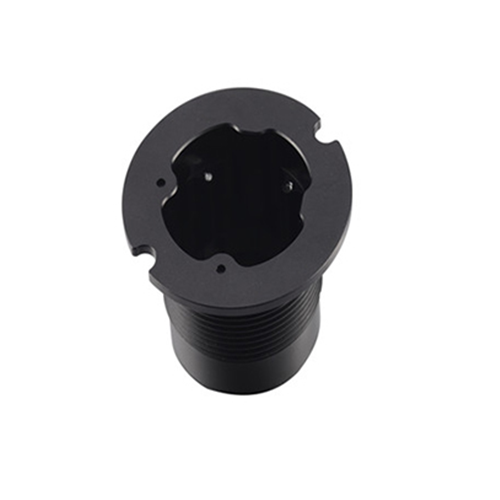
Manufacturing Processes for Carbon Fiber Composite Drone Parts
Layup and Molding
The most common manufacturing technique involves layering carbon fiber fabric sheets in a mold, impregnated with resin, and cured under heat and pressure. This process allows customization of fiber orientation and thickness to meet specific strength and stiffness requirements.
Prepreg Layup
Pre-impregnated carbon fiber sheets with pre-applied resin are laid into molds and cured in autoclaves for high-performance parts with consistent quality and superior mechanical properties.
Resin Transfer Molding (RTM)
RTM injects resin into a closed mold containing carbon fiber reinforcement, enabling complex shapes and high production efficiency.
CNC Machining
After curing, composite parts may be CNC-machined to achieve precise dimensions and surface finishes.
Design Considerations for Carbon Fiber Composite UAV Parts
Fiber Orientation
Optimizing fiber alignment in different directions enhances mechanical performance under various load conditions.
Layer Thickness and Stacking Sequence
Designing the number and order of fiber layers tailors stiffness, flexibility, and weight to the drone’s mission profile.
Integration with Other Materials
Hybrid designs combining carbon fiber composites with metals or plastics balance cost, weight, and mechanical needs.
Thermal Management
Incorporating heat dissipation strategies ensures components do not overheat during extended missions.
Applications of Carbon Fiber Composite Parts in UAVs
Professional and Racing Drones
High-performance drones benefit from carbon fiber’s lightweight and stiffness, providing agility and speed.
Aerial Photography and Cinematography
Carbon fiber mounts and frames reduce vibrations, enabling sharper images and stable footage.
Industrial Inspection
Durable carbon fiber drone parts withstand rugged environments in power line, pipeline, and infrastructure inspections.
Agricultural Monitoring
Lightweight carbon fiber drones can cover large farmland areas efficiently while carrying multispectral sensors.
Military and Defense
Stealth and durability attributes of carbon fiber composites suit defense drones tasked with reconnaissance and surveillance.
Challenges and Limitations
Cost
Carbon fiber composites are more expensive than traditional materials, impacting production budgets.
Manufacturing Complexity
Producing high-quality parts requires skilled labor and specialized equipment, increasing lead times.
Repair Difficulty
Damaged composite parts often require complex repair processes compared to metal components.
Future Trends and Innovations
Nanocomposites
Integrating carbon nanotubes or graphene into composites can further enhance strength and conductivity.
3D Printing of Carbon Fiber Parts
Additive manufacturing with carbon fiber-reinforced filaments enables rapid prototyping and complex geometries.
Smart Composites
Embedding sensors into carbon fiber structures allows real-time health monitoring of Drone components.
Conclusion
Carbon fiber composite parts have revolutionized drone design and manufacturing by delivering exceptional strength, durability, and weight savings. These materials enable UAVs to achieve longer flight times, carry heavier payloads, and operate reliably in challenging environments. As manufacturing techniques advance and costs decrease, carbon fiber composites will continue to play a critical role in expanding the capabilities and applications of drones worldwide.

 Español
 Portugues
 Pусский
 Français
 Deutsch
 日本語
 한국어
 العربية
 Italiano
 Nederlands
 Ελληνικά
 Svenska
 Polski
 ไทย
 Türk dili
 हिन्दी
 Indonesia
 Melayu
 Tiếng Việt
 中文
 dansk
 Magyar
 қазақ
 বাংলা
 עִברִית
 čeština
 Soomaali
 မြန်မာ
 فارسی
 українська
 norsk
 Gaeilge
 беларускі
 Română
 Filipino
 lietuvių
 македонски
 Suomalainen
 slovenský
 o'zbek
 اردو
 հայերեն
 Igbo
 български
 سنڌي
 සිංහල
 Hrvatski
 íslenskur
 Zulu South Africa
 Afrikaans isiXhosa
 ಕನ್ನಡ
 Indonésia Sunda
 Кыргызча
 тоҷикӣ
 Србија
 Hawaii
 Cebu
 नेपाल
 latvija
 slovenija
 kiswahili
 ਪੰਜਾਬ
 پښتو
 Azərbaycan
 አማራ
 Shqipëria
 Chicheva
 ଓଡିଆ
 Setswana
 Afrikaans
 Aymara
 Башҡорт
 Türkmenler
 ትግሪኛ
 Afaan Oromoo
 অসমীয়া
 Kinyarwanda
 Ilocano
 Wolof
 अवधी
 Oluganda
 Bikol
 Fulɓe
 Kikongo
 Lingala
 རྫོང་ཁ
 Santali
 Аҧсуа
 Чӑваш
 Batak Karo



 Phone