Customized UAV parts processing: Elevating Drone Performance through Precision Manufacturing
Introduction
Unmanned Aerial Vehicles (UAVs), commonly known as drones, have transformed numerous industries, including agriculture, defense, logistics, environmental monitoring, surveying, and entertainment. As UAV technology continues to evolve, so does the demand for high-performance, reliable, and application-specific Drone components. Customized UAV parts processing plays a pivotal role in meeting these demands by providing tailored manufacturing solutions that optimize drone functionality, durability, and efficiency.
This comprehensive guide explores the significance of customized UAV parts processing, delves into the materials and manufacturing techniques used, highlights key applications, and explains why precision and customization are critical for UAV success in diverse environments.
The Importance of Customized UAV Parts Processing
Tailored Solutions for Diverse UAV Needs
Every UAV application comes with unique requirements dictated by mission parameters, environmental conditions, payload types, and flight dynamics. Off-the-shelf components often fall short in addressing these specific challenges. Customized UAV parts processing allows manufacturers and operators to create components that perfectly fit the drone’s design and operational goals, enhancing overall performance.
Enhanced Structural Integrity and Weight Optimization
Custom parts can be designed to maximize strength while minimizing weight, a crucial balance in UAV engineering. By selecting appropriate materials and optimizing geometries through advanced manufacturing, customized parts contribute to better flight endurance, maneuverability, and payload capacity.
Improved Durability and Reliability
UAVs often operate in harsh environments—dusty deserts, humid rainforests, freezing mountains, or corrosive coastal areas. Customized processing enables the use of wear-resistant materials and protective surface treatments that extend the lifespan of drone parts, reduce maintenance costs, and ensure mission success.
Greater Design Flexibility
With customized processing, UAV designers can integrate complex geometries, multi-functional features, and tight tolerances that standard parts cannot provide. This flexibility leads to innovations such as lightweight lattice structures, vibration-damping mounts, and optimized airflow components.
Common Materials Used in Customized UAV Parts
1. Aluminum Alloys
Properties: Lightweight, strong, corrosion-resistant, excellent machinability.
Applications: Airframes, motor mounts, structural brackets.
Benefits: Good thermal conductivity helps dissipate heat from motors and electronics.
2. Titanium Alloys
Properties: High strength-to-weight ratio, corrosion-resistant, fatigue-resistant.
Applications: High-stress components such as landing gear and fasteners.
Benefits: Ideal for UAVs requiring durability in extreme conditions.
3. Carbon Fiber Composites
Properties: Extremely lightweight, high stiffness, customizable layups.
Applications: Airframe panels, rotor blades, antenna mounts.
Benefits: Excellent vibration dampening and weight reduction.
4. Stainless Steel
Properties: Durable, corrosion-resistant, higher weight.
Applications: Mechanical linkages, fasteners, protective housings.
Benefits: Used where strength and wear resistance outweigh weight concerns.
5. Engineering Plastics
Properties: Lightweight, flexible, corrosion-resistant.
Applications: Connectors, insulators, housings.
Benefits: Cost-effective for non-structural parts with complex shapes.
Advanced Manufacturing Techniques for Customized UAV Parts
CNC Machining
Computer Numerical Control (CNC) machining provides precise shaping of metals and plastics with tight tolerances. It is ideal for producing complex parts such as motor mounts, brackets, and housings that demand high accuracy and surface finish.
Additive Manufacturing (3D Printing)
Additive manufacturing allows layer-by-layer construction of parts from materials like polymers, metals, and composites. It enables rapid prototyping, complex internal structures, and lightweight lattice designs that reduce weight while maintaining strength.
Composite Layup and Molding
Carbon fiber and other composites are laid up in molds to form aerodynamic and lightweight panels and blades. Custom layup schedules can be tailored for stiffness, flexibility, or impact resistance depending on UAV mission needs.
Surface Treatments and Coatings
Customized surface treatments like anodizing, powder coating, and anti-corrosion coatings enhance durability and environmental resistance. Wear-resistant coatings improve part longevity, especially in high-friction areas.
Assembly and Integration
Customized UAV parts processing includes precision assembly to ensure parts fit and function as intended. This involves tight quality control and sometimes the integration of sensors or electronic components into structural parts.
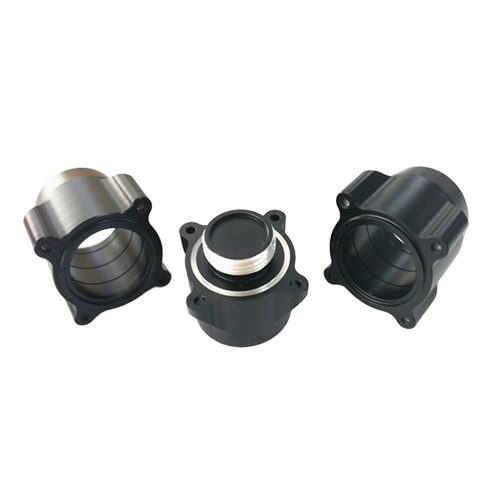
Key Applications of Customized UAV Parts
Agriculture
UAVs in agriculture are used for crop monitoring, spraying, and soil analysis. Customized parts include corrosion-resistant spray nozzles, lightweight frames for extended flight, and vibration-damped mounts for sensitive sensors.
Defense and Security
Military drones require ruggedized parts that withstand extreme temperatures, impacts, and electromagnetic interference. Customized processing delivers hardened housings, reinforced landing gear, and precision gimbal mounts for cameras.
Surveying and Mapping
Survey drones demand high stability and precision. Customized UAV parts such as adjustable camera mounts, aerodynamic fairings, and vibration isolation systems enhance data quality and operational efficiency.
Delivery and Logistics
Drones used for package delivery benefit from customized payload racks, lightweight structural parts, and secure locking mechanisms designed to handle specific cargo sizes and weights.
Filmmaking and Photography
Cinematic drones require smooth gimbals, shock-absorbing mounts, and aerodynamic shells to capture stable, high-quality footage. Customized parts enable quieter operation and longer flight times.
Design Considerations in Customized UAV Parts Processing
Weight vs. Strength
Balancing lightweight design with sufficient strength is paramount. Advanced materials and design optimization tools help engineers create parts that meet strength requirements without unnecessary mass.
Aerodynamics
Custom parts must integrate seamlessly with drone aerodynamics to reduce drag and improve efficiency. Smooth surfaces and streamlined shapes are often achieved through precision machining and molding.
Thermal Management
Components generating heat, such as motors and batteries, require parts designed for efficient heat dissipation to prevent overheating and prolong UAV lifespan.
Environmental Resistance
Custom parts are designed to resist corrosion, UV degradation, moisture, and temperature extremes, ensuring reliable UAV operation in diverse environments.
Cost-effectiveness
While customization offers many benefits, cost considerations influence material and manufacturing method choices to maintain competitiveness.
Quality Control and Testing
Customized UAV parts undergo rigorous testing to ensure they meet design specifications and operational standards. Common tests include:
Dimensional accuracy verification
Material strength and fatigue testing
Environmental exposure simulation (temperature, humidity, corrosion)
Functional testing of moving components
Vibration and shock resistance assessments
High-quality manufacturing and testing guarantee that custom parts enhance UAV reliability and safety.
Why Choose Customized UAV Parts Processing?
Precision Fit and Function
Custom parts are designed specifically for your UAV’s architecture, ensuring perfect integration and optimal performance.
Enhanced Performance
Tailored designs maximize flight efficiency, payload capacity, and durability.
Competitive Advantage
Using customized components allows UAV manufacturers and operators to differentiate their products and services in a crowded market.
Adaptability
Custom parts enable quick adaptation to new missions, technologies, or regulatory requirements.
Long-Term Cost Savings
Though initially more expensive than generic parts, customized UAV components reduce maintenance and replacement costs over the drone’s lifetime.
Conclusion
Customized UAV parts processing is an essential element in the advancement of drone technology. By combining cutting-edge materials, precision manufacturing techniques, and application-specific design, customized parts unlock new levels of UAV performance, durability, and versatility.
As drone applications continue to expand and diversify, the ability to tailor components to unique operational needs becomes increasingly vital. Whether for agriculture, defense, surveying, delivery, or entertainment, investing in customized UAV parts processing ensures drones operate at their full potential, delivering reliable and efficient results in even the most challenging environments.

 Español
 Portugues
 Pусский
 Français
 Deutsch
 日本語
 한국어
 العربية
 Italiano
 Nederlands
 Ελληνικά
 Svenska
 Polski
 ไทย
 Türk dili
 हिन्दी
 Indonesia
 Melayu
 Tiếng Việt
 中文
 dansk
 Magyar
 қазақ
 বাংলা
 עִברִית
 čeština
 Soomaali
 မြန်မာ
 فارسی
 українська
 norsk
 Gaeilge
 беларускі
 Română
 Filipino
 lietuvių
 македонски
 Suomalainen
 slovenský
 o'zbek
 اردو
 հայերեն
 Igbo
 български
 سنڌي
 සිංහල
 Hrvatski
 íslenskur
 Zulu South Africa
 Afrikaans isiXhosa
 ಕನ್ನಡ
 Indonésia Sunda
 Кыргызча
 тоҷикӣ
 Србија
 Hawaii
 Cebu
 नेपाल
 latvija
 slovenija
 kiswahili
 ਪੰਜਾਬ
 پښتو
 Azərbaycan
 አማራ
 Shqipëria
 Chicheva
 ଓଡିଆ
 Setswana
 Afrikaans
 Aymara
 Башҡорт
 Türkmenler
 ትግሪኛ
 Afaan Oromoo
 অসমীয়া
 Kinyarwanda
 Ilocano
 Wolof
 अवधी
 Oluganda
 Bikol
 Fulɓe
 Kikongo
 Lingala
 རྫོང་ཁ
 Santali
 Аҧсуа
 Чӑваш
 Batak Karo



 Phone