Five-Axis CNC Parts Processing: Unlocking Complex Precision Manufacturing
Introduction
In modern manufacturing, the demand for complex, high-precision components continues to rise across industries such as aerospace, automotive, medical devices, and electronics. To meet these challenges, five-axis CNC parts processing has emerged as a vital technology. This advanced machining process allows for simultaneous movement along five axes, enabling the production of intricate geometries and complex shapes that are difficult or impossible to achieve with traditional three-axis machines.
This comprehensive article explores the principles, advantages, applications, workflow, and future trends of five-axis CNC machining, providing a thorough understanding of how it drives innovation and efficiency in precision manufacturing.
What is Five-Axis CNC Parts Processing?
Five-axis CNC parts processing involves the use of computer numerical control (CNC) machines capable of moving a cutting tool or workpiece along five different axes simultaneously. Traditional CNC machines typically operate on three linear axes—X, Y, and Z. In contrast, five-axis machines add two rotational axes, often denoted as A and B or A and C, enabling the tool to approach the workpiece from virtually any direction.
This capability allows manufacturers to machine complex shapes with undercuts, deep cavities, and intricate contours in a single setup without multiple re-fixturing. The result is higher accuracy, reduced cycle times, and superior surface finishes.
The Five Axes Explained
X-Axis: Horizontal movement from left to right
Y-Axis: Horizontal movement from front to back
Z-Axis: Vertical movement up and down
A-Axis: Rotation around the X-axis (tilting the tool or table)
B-Axis: Rotation around the Y-axis (tilting the tool or table)
Some machines may use a C-axis (rotation around the Z-axis), but the essential idea is having two additional rotational degrees of freedom beyond the standard linear motions.
Key Advantages of Five-Axis CNC Machining
1. Machining Complex Geometries
Five-axis CNC machining allows the creation of parts with complex shapes such as turbine blades, impellers, medical implants, and molds with intricate undercuts or deep cavities. The additional axes enable the tool to reach angles and surfaces that would require multiple setups on 3-axis machines.
2. Improved Accuracy and Consistency
By machining the part in a single setup, five-axis processing reduces errors related to repositioning and re-fixturing. This leads to better dimensional accuracy and consistency across batches.
3. Reduced Setup Time
The ability to access multiple faces of a part without manual intervention significantly cuts down setup and changeover time. This efficiency translates to faster delivery and lower labor costs.
4. Enhanced Surface Finish
The five-axis toolpaths allow the cutting tool to maintain optimal angles to the surface, resulting in superior finishes and reduced need for secondary polishing or finishing operations.
5. Greater Tool Life
With better tool orientation, cutting forces are optimized, leading to less wear and longer tool life. This increases machining stability and lowers tooling costs.
Materials Commonly Processed with Five-Axis CNC Machining
Five-axis CNC machines can process a wide range of materials, including:
Metals: Aluminum, stainless steel, titanium, brass, copper, tool steels, superalloys
Plastics: Nylon, PEEK, Delrin, PTFE, ABS
Composites: Carbon fiber and glass fiber reinforced polymers used in aerospace and automotive
Other Materials: Ceramics and specialty alloys used for wear-resistant parts
Material selection depends on the application, machinability, and required part properties.
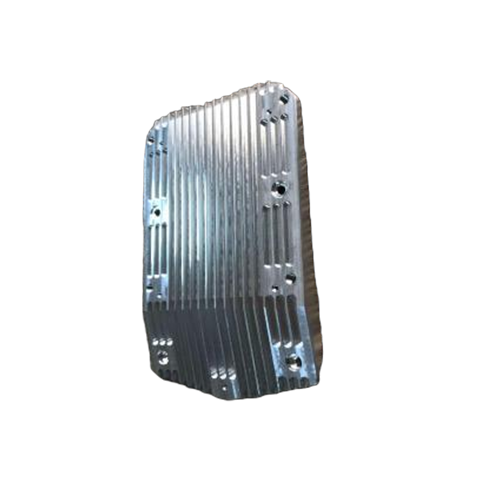
Applications of Five-Axis CNC Parts Processing
Aerospace Industry
Components such as turbine blades, engine casings, and airframe parts require complex geometries with high precision and tight tolerances. Five-axis machining ensures structural integrity and aerodynamic performance.
Medical Devices
Implants, surgical instruments, and prosthetics benefit from five-axis CNC machining's ability to produce intricate organic shapes and ensure biocompatibility with precise surface finishes.
Automotive Manufacturing
High-performance engine components, transmission parts, and molds for plastic parts are produced with five-axis machining for accuracy and durability.
Tool and Die Making
Molds and dies with complex cavities and surfaces are efficiently machined, reducing production lead times and improving quality.
Electronics and Consumer Goods
Enclosures, connectors, and precision housings with detailed features are fabricated using five-axis CNC machines to meet stringent specifications.
The Five-Axis CNC Machining Process Workflow
1. Design and CAD Modeling
The process begins with creating a detailed 3D CAD model of the part, including all dimensions, tolerances, and surface finish requirements. Complex geometries are designed with the five-axis capability in mind to fully leverage its advantages.
2. CAM Programming
Using advanced CAM (Computer-Aided Manufacturing) software, the CAD model is translated into optimized toolpaths that control the machine’s five axes. This stage involves selecting cutting tools, defining speeds, feeds, and tool orientations to ensure efficient and accurate machining.
3. Machine Setup and Fixturing
The part is secured using precision fixtures that allow maximum accessibility while maintaining stability during machining. Proper setup is critical for maintaining accuracy throughout the process.
4. Trial Run and Simulation
Before actual machining, simulations validate toolpaths, check for collisions, and ensure optimal cutting strategies. A trial run or dry run may be performed to verify machine movements.
5. Machining Operation
The CNC machine executes the programmed operations, cutting the part with simultaneous five-axis movements to achieve the desired geometry.
6. Inspection and Quality Control
Finished parts undergo rigorous inspection using coordinate measuring machines (CMM), laser scanning, and other metrology tools to verify dimensional accuracy and surface quality.
7. Post-Processing
Additional processes such as deburring, polishing, coating, or heat treatment may be applied depending on the part requirements.
Challenges in Five-Axis CNC Parts Processing
Programming Complexity
Five-axis machining requires sophisticated CAM programming and skilled operators to manage complex toolpaths and machine behaviors.
Higher Equipment Costs
Five-axis CNC machines are more expensive than traditional three-axis machines, necessitating higher capital investment.
Maintenance and Training
Maintaining five-axis machines requires specialized knowledge, and operators must undergo thorough training to handle the advanced controls and safety procedures.
Tips for Optimizing Five-Axis CNC Machining
Design with Machinability in Mind: Early collaboration between design and manufacturing teams can optimize parts for five-axis machining, reducing unnecessary complexity.
Use High-Quality Tooling: Invest in advanced cutting tools designed for multi-axis machining to improve efficiency and tool life.
Leverage Simulation Software: Utilize CAM simulation to identify and resolve potential issues before machining.
Maintain Regular Machine Calibration: Ensure the CNC machine is properly calibrated to maintain accuracy over time.
Implement Quality Monitoring: Use in-process inspection and monitoring to detect deviations early.
Future Trends in Five-Axis CNC Machining
Artificial Intelligence and Automation: AI-driven programming and automated tool changers will streamline setup and optimize cutting strategies.
Hybrid Manufacturing: Integration with additive manufacturing technologies will allow near-net-shape production followed by precision finishing.
Enhanced Connectivity: Smart factories will enable real-time monitoring and predictive maintenance of five-axis CNC machines.
Expanded Materials: New alloys and composites will challenge machining processes, driving innovation in tooling and machining methods.
Conclusion
Five-axis CNC parts processing revolutionizes manufacturing by enabling the production of complex, high-precision components with efficiency and consistency. Its ability to machine intricate geometries in fewer setups reduces costs and lead times while enhancing quality. Industries ranging from aerospace to medical devices depend on five-axis machining to meet their demanding specifications.
As technology advances, five-axis CNC machining will continue to evolve, offering greater automation, intelligence, and material capabilities. Manufacturers who leverage these technologies will gain a competitive edge through faster innovation, improved product quality, and operational excellence.

 Español
 Portugues
 Pусский
 Français
 Deutsch
 日本語
 한국어
 العربية
 Italiano
 Nederlands
 Ελληνικά
 Svenska
 Polski
 ไทย
 Türk dili
 हिन्दी
 Indonesia
 Melayu
 Tiếng Việt
 中文
 dansk
 Magyar
 қазақ
 বাংলা
 עִברִית
 čeština
 Soomaali
 မြန်မာ
 فارسی
 українська
 norsk
 Gaeilge
 беларускі
 Română
 Filipino
 lietuvių
 македонски
 Suomalainen
 slovenský
 o'zbek
 اردو
 հայերեն
 Igbo
 български
 سنڌي
 සිංහල
 Hrvatski
 íslenskur
 Zulu South Africa
 Afrikaans isiXhosa
 ಕನ್ನಡ
 Indonésia Sunda
 Кыргызча
 тоҷикӣ
 Србија
 Hawaii
 Cebu
 नेपाल
 latvija
 slovenija
 kiswahili
 ਪੰਜਾਬ
 پښتو
 Azərbaycan
 አማራ
 Shqipëria
 Chicheva
 ଓଡିଆ
 Setswana
 Afrikaans
 Aymara
 Башҡорт
 Türkmenler
 ትግሪኛ
 Afaan Oromoo
 অসমীয়া
 Kinyarwanda
 Ilocano
 Wolof
 अवधी
 Oluganda
 Bikol
 Fulɓe
 Kikongo
 Lingala
 རྫོང་ཁ
 Santali
 Аҧсуа
 Чӑваш
 Batak Karo



 Phone