High-Efficiency Five-Axis Parts Processing: Precision, Productivity, and Competitive Edge
Introduction
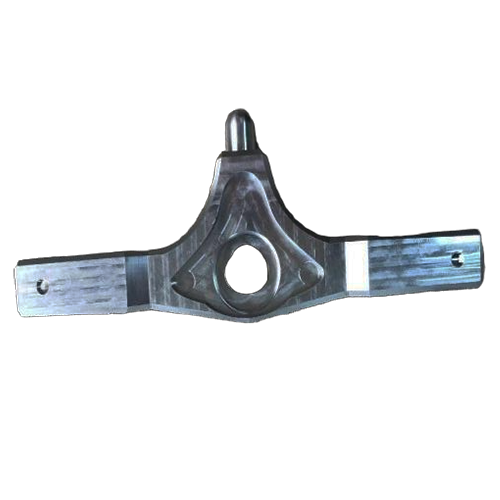
In the ever-evolving world of advanced manufacturing, high-efficiency five-axis parts processing stands at the forefront of technological innovation. As global industries demand faster production cycles, tighter tolerances, and increasingly complex geometries, five-axis machining emerges as a critical solution for delivering unmatched precision and productivity. From aerospace to automotive, medical devices to energy equipment, the integration of five-axis CNC technology has revolutionized how manufacturers approach part production.
This comprehensive guide explores the capabilities, advantages, applications, and future trends of high-efficiency five-axis parts processing. Whether you're a manufacturing engineer, OEM decision-maker, or CNC enthusiast, this article will help you understand why five-axis machining is essential for modern production success.
What is Five-Axis Parts Processing?
Five-axis machining refers to a CNC process that moves a cutting tool or part along five different axes simultaneously: X, Y, Z, A (rotational around X), and B (rotational around Y). Unlike traditional three-axis machining, which only allows linear movement on three planes, five-axis machining enables full contouring and multi-angle cutting, making it ideal for complex geometries and high-precision applications.
This type of machining significantly reduces the number of setups required, enhances accuracy, and increases the efficiency of part manufacturing. The integration of automatic tool changers, high-speed spindles, and computer-aided manufacturing (CAM) software further streamlines the process.
Advantages of High-Efficiency Five-Axis Processing
1. Single Setup for Complex Parts
One of the most valuable advantages of five-axis machining is the ability to machine complex features in a single setup. With fewer re-clampings, the part retains its positional accuracy, which is crucial for high-tolerance industries like aerospace or medical device manufacturing.
2. Improved Surface Finish and Precision
By maintaining an optimal cutting angle throughout the machining process, five-axis machines deliver superior surface finishes and dimensional accuracy. This reduces or eliminates the need for secondary finishing processes such as grinding or polishing.
3. Reduced Machining Time
Five-axis machines can access more features in a single pass, significantly shortening production cycles. The tool can approach the workpiece from virtually any direction, enabling continuous and uninterrupted machining of complex profiles.
4. Minimized Tool Wear and Extended Tool Life
The ability to tilt and rotate the tool to maintain a better cutting position reduces the load on tools, resulting in lower wear rates and longer tool life. This leads to reduced tooling costs and less frequent tool changes.
5. Support for Intricate Geometries
Five-axis processing allows for the manufacturing of parts with undercuts, deep cavities, and complex angles that would be impossible or inefficient with conventional three-axis equipment.
Applications Across Industries
Aerospace
In aerospace, precision and weight reduction are key. Five-axis machining is widely used to create turbine blades, impellers, airframe components, and structural elements that require tight tolerances and intricate shapes.
Automotive
From engine blocks to transmission parts, five-axis processing is essential in the automotive sector for producing high-performance components quickly and reliably.
Medical
In the medical field, surgical instruments, implants, and prosthetic components often require precise geometries and biocompatible materials. Five-axis CNC machines are used to achieve these requirements efficiently.
Energy and Power Generation
Five-axis machines are employed to manufacture complex parts such as turbine housings, pump components, and valve bodies used in energy and power generation systems.
Mold and Die Making
High-efficiency five-axis machining is indispensable in mold and die making, enabling faster cycle times and better surface finishes for injection molds, casting dies, and stamping tools.
Core Technologies Enabling High-Efficiency
1. Advanced CAM Software
Modern CAM software enables real-time toolpath simulation, collision detection, and automated optimization for five-axis operations. It plays a pivotal role in reducing programming time and ensuring optimal machining strategies.
2. High-Speed Spindles
Today’s five-axis machines are equipped with high-speed spindles that allow rapid material removal while maintaining tight tolerances. These spindles can operate at speeds of 15,000 RPM or more, enabling efficient cutting of both metals and composites.
3. Dynamic Workpiece Fixturing
Innovative work-holding solutions allow for stable and flexible fixturing, minimizing vibration and maximizing precision even during aggressive machining operations.
4. Real-Time Monitoring and Feedback Systems
Incorporating sensors and intelligent monitoring systems, five-axis machines can provide real-time feedback on tool wear, vibration, temperature, and cutting force. This helps prevent errors, extends tool life, and reduces downtime.
Materials Suitable for Five-Axis Processing
High-efficiency five-axis machining is capable of processing a wide variety of materials, including:
Aluminum alloys
Titanium
Stainless steel
Carbon steel
Inconel
Magnesium
Engineering plastics
Composite materials
The flexibility in material handling enables manufacturers to serve multiple industries without changing core equipment.
Common Five-Axis Machining Techniques
Swarf Machining
This technique uses the side of the cutting tool to remove material along a complex surface. It is particularly useful for creating turbine blades and other twisted geometries.
3+2 Machining
Also known as positional five-axis machining, this method involves rotating the part into a fixed orientation and then using 3-axis machining to finish the job. It’s simpler but still powerful for semi-complex shapes.
Simultaneous Five-Axis Machining
In this method, all five axes move concurrently. It allows for smooth tool motion across complex contours, ideal for sculpted surfaces and mold cavities.
Optimizing for Efficiency
Toolpath Optimization
Using advanced toolpath strategies reduces air-cutting time, improves chip load distribution, and ensures consistent tool engagement.
Machine Calibration and Maintenance
Regular calibration ensures positional accuracy and surface quality, while proactive maintenance prevents unplanned downtime.
Operator Skill Development
Skilled operators and programmers can maximize the potential of five-axis machines by selecting the right tools, speeds, and machining strategies.
Challenges and Solutions
Challenge 1: Higher Initial Investment
Solution: While the upfront cost of five-axis machines is higher, the long-term ROI is achieved through faster production cycles, less scrap, and reduced labor costs.
Challenge 2: Programming Complexity
Solution: CAM software automation and post-processing support simplify programming, even for intricate part geometries.
Challenge 3: Steeper Learning Curve
Solution: Training programs and simulation tools help operators and engineers adapt quickly to five-axis workflows.
Quality Control in Five-Axis Machining
To ensure the quality of high-efficiency five-axis processed parts, manufacturers use:
CMM (Coordinate Measuring Machines) for dimensional inspection
Laser scanning systems for surface and contour validation
In-process probing to monitor real-time position and orientation
Statistical Process Control (SPC) to track performance trends
These practices ensure the highest consistency, especially for safety-critical industries.
Environmental and Cost Efficiency
High-efficiency five-axis machining also aligns with sustainability and cost control goals:
Less Waste: More accurate cuts mean reduced material waste.
Energy Savings: Shorter machining cycles translate into less power consumption.
Compact Workspaces: Single-machine multitasking reduces the footprint of operations.
Fewer Consumables: Lower tool wear means fewer replacements and lower environmental impact.
Future Trends in Five-Axis Machining
Automation Integration
Robotic loading/unloading, automated tool changers, and intelligent scheduling systems are making five-axis operations more autonomous.
Artificial Intelligence
AI and machine learning are beginning to optimize toolpaths, adjust feeds and speeds in real-time, and detect anomalies before they become faults.
Additive + Subtractive Hybrid Machines
Some machines now combine five-axis CNC with additive manufacturing, offering unprecedented design flexibility and part consolidation.
Cloud-Based Monitoring
Cloud-connected CNC machines allow remote diagnostics, productivity monitoring, and software updates to be performed securely and efficiently.
Why Choose High-Efficiency Five-Axis Machining for Your Business?
High-efficiency five-axis parts processing is more than just a technological upgrade—it's a strategic move toward:
By reducing lead times, increasing accuracy, and enabling the production of complex geometries, five-axis machining delivers exceptional value across all stages of manufacturing.
Conclusion
High-efficiency five-axis parts processing is redefining what’s possible in precision engineering. It allows manufacturers to push the limits of design, improve productivity, and meet the growing demands of innovation-driven industries. With the convergence of smarter tools, better software, and a skilled workforce, five-axis machining isn’t just the future of advanced manufacturing—it’s the present.
Businesses looking to stay ahead must invest not just in machines but in the knowledge and systems that unlock their full potential. With high-efficiency five-axis processing, precision and performance are no longer trade-offs—they’re the standard.

 Español
 Portugues
 Pусский
 Français
 Deutsch
 日本語
 한국어
 العربية
 Italiano
 Nederlands
 Ελληνικά
 Svenska
 Polski
 ไทย
 Türk dili
 हिन्दी
 Indonesia
 Melayu
 Tiếng Việt
 中文
 dansk
 Magyar
 қазақ
 বাংলা
 עִברִית
 čeština
 Soomaali
 မြန်မာ
 فارسی
 українська
 norsk
 Gaeilge
 беларускі
 Română
 Filipino
 lietuvių
 македонски
 Suomalainen
 slovenský
 o'zbek
 اردو
 հայերեն
 Igbo
 български
 سنڌي
 සිංහල
 Hrvatski
 íslenskur
 Zulu South Africa
 Afrikaans isiXhosa
 ಕನ್ನಡ
 Indonésia Sunda
 Кыргызча
 тоҷикӣ
 Србија
 Hawaii
 Cebu
 नेपाल
 latvija
 slovenija
 kiswahili
 ਪੰਜਾਬ
 پښتو
 Azərbaycan
 አማራ
 Shqipëria
 Chicheva
 ଓଡିଆ
 Setswana
 Afrikaans
 Aymara
 Башҡорт
 Türkmenler
 ትግሪኛ
 Afaan Oromoo
 অসমীয়া
 Kinyarwanda
 Ilocano
 Wolof
 अवधी
 Oluganda
 Bikol
 Fulɓe
 Kikongo
 Lingala
 རྫོང་ཁ
 Santali
 Аҧсуа
 Чӑваш
 Batak Karo



 Phone