Precision Metal CNC Parts Processing: Advanced Manufacturing for High-Quality Metal Components
Introduction
Precision metal CNC parts processing is a cornerstone of modern manufacturing, enabling industries worldwide to produce complex, high-quality metal components with remarkable accuracy and efficiency. As demands for tighter tolerances, enhanced durability, and intricate designs grow, precision CNC machining has become the preferred method for fabricating custom metal parts. From aerospace to medical devices, automotive to electronics, this technology supports innovation by delivering components that meet stringent specifications and performance requirements.
This comprehensive guide explores the fundamentals, technologies, materials, applications, benefits, and future trends related to precision metal CNC parts processing. Whether you are an engineer, designer, or procurement professional, understanding the capabilities and advantages of CNC machining will help optimize your manufacturing decisions and product quality.
What is Precision Metal CNC Parts Processing?
Precision metal CNC parts processing involves the use of Computer Numerical Control (CNC) machines to fabricate metal components with tight dimensional tolerances and excellent surface finishes. The CNC process automates machining operations such as milling, turning, drilling, and grinding by interpreting digital design files and executing highly controlled cutting movements.
The “precision” aspect refers to the ability to consistently produce parts with accuracy often measured in microns, ensuring that each component fits perfectly within its assembly or system. These parts frequently feature complex geometries, including multiple axes, curved surfaces, intricate contours, and fine details that traditional manual machining cannot achieve efficiently.
Key Technologies in Precision Metal CNC Parts Processing
CNC Milling
CNC milling uses rotary cutting tools to remove material from metal workpieces, shaping them into precise 3D forms. Multi-axis milling centers—commonly 3, 4, or 5-axis—allow simultaneous movement along various planes, facilitating complex part geometries in fewer setups. This enhances efficiency and dimensional accuracy.
CNC Turning
Turning involves rotating the metal workpiece against a stationary cutting tool, primarily shaping cylindrical parts such as shafts, rods, and bushings. CNC lathes can produce highly accurate diameters, threads, and grooves with minimal waste.
Wire Electrical Discharge Machining (EDM)
Wire EDM uses a thin electrically charged wire to cut through conductive metals by eroding material with sparks. It excels at producing intricate shapes, sharp internal corners, and fine details that are difficult to machine conventionally.
Grinding
Grinding machines refine surfaces to achieve extremely smooth finishes and tight tolerances. Precision grinding is often a finishing step to enhance the mechanical properties and aesthetics of metal parts.
Multi-Tasking CNC Machines
Advanced CNC systems combine milling, turning, drilling, and other operations into a single machine, reducing handling and setup times while maintaining tight precision across multiple machining processes.
Materials Used in Precision Metal CNC Parts Processing
The choice of material plays a crucial role in determining the machining approach, tooling requirements, and final application. Common metals processed with CNC machining include:
Aluminum Alloys: Lightweight and corrosion-resistant, ideal for aerospace, automotive, and electronics. Aluminum is easy to machine and offers excellent strength-to-weight ratio.
Stainless Steel: Known for its strength, corrosion resistance, and durability. Widely used in medical devices, food processing equipment, and chemical industries.
Titanium: Extremely strong yet lightweight, titanium is valuable in aerospace and biomedical implants but requires specialized tooling due to its toughness.
Brass and Copper: Excellent for electrical conductivity and machinability, commonly used in connectors and heat exchangers.
Carbon Steel and Tool Steels: Provide high strength and wear resistance for industrial tooling, gears, and heavy-duty parts.
Nickel Alloys and Superalloys: Used in high-temperature, high-stress environments such as turbine engines.
Advantages of Precision Metal CNC Parts Processing
Exceptional Accuracy and Repeatability
Precision CNC machining achieves tolerances as tight as ±0.001 mm, ensuring each part conforms precisely to design specifications. Automated control reduces human error, enabling consistent quality across large batches.
Complex Geometries Made Possible
multi-axis CNC machining can create parts with complex contours, intricate features, and multiple functional surfaces in fewer setups, improving lead times and reducing costs.
Efficient Material Usage
CNC machining optimizes cutting paths and tool use, minimizing scrap and waste compared to traditional subtractive methods or casting.
Flexibility in Production Volume
CNC machining is suitable for prototyping, small-batch runs, and large-scale manufacturing, allowing manufacturers to scale operations without compromising precision.
Wide Material Compatibility
From soft aluminum to hard titanium, CNC machining accommodates a broad spectrum of metals, enabling tailored solutions for specific application needs.
Superior Surface Finish
Machined parts often require minimal secondary finishing, reducing production time and improving product aesthetics and performance.
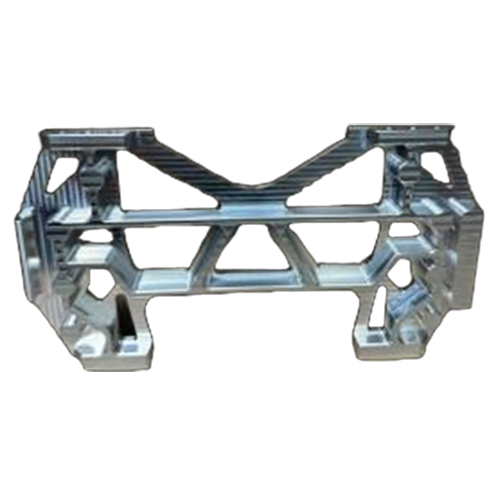
Typical Applications of Precision Metal CNC Parts Processing
Aerospace Industry
Components such as structural brackets, engine parts, landing gear components, and avionics housings require lightweight materials and exacting tolerances. CNC machining supports strict quality controls critical for flight safety and performance.
Medical and Dental Devices
Implants, surgical instruments, prosthetics, and dental restorations benefit from biocompatible metals precisely machined for comfort, durability, and functionality.
Automotive Sector
Precision CNC machining produces engine components, transmission parts, suspension brackets, and custom tooling used in both conventional and electric vehicles.
Electronics and Telecommunications
Housings, heat sinks, connectors, and chassis require precise dimensions and intricate designs for optimal performance and thermal management.
Industrial Equipment and Robotics
Gears, shafts, couplings, and mounting plates are precision-machined to endure high mechanical stresses and support automated systems.
The Precision Metal CNC Parts Processing Workflow
1. Design and Engineering
Parts are designed using CAD software with detailed specifications including geometry, tolerances, and material selection. Engineers assess designs for manufacturability (DFM) to optimize production.
2. CAM Programming
Computer-Aided Manufacturing (CAM) software translates CAD designs into machine-readable G-code, defining tool paths, cutting speeds, and feeds for efficient machining.
3. Setup and Fixturing
Proper fixturing secures the workpiece to prevent movement and vibration, which could compromise precision. Experienced technicians configure tooling and calibrate machines accordingly.
4. Machining Operations
CNC machines execute programmed instructions, performing milling, turning, drilling, or EDM operations with high accuracy and control.
5. Quality Inspection
Parts undergo rigorous dimensional and surface quality inspections using Coordinate Measuring Machines (CMM), optical scanners, and surface roughness testers to ensure compliance with specifications.
6. Post-Processing
Secondary processes such as deburring, polishing, heat treatment, coating, or anodizing may be applied to enhance durability, corrosion resistance, or aesthetics.
7. Packaging and Delivery
Finished parts are carefully packaged to prevent damage during transportation and delivered according to customer requirements.
Challenges and Solutions in Precision Metal CNC Parts Processing
Tool Wear and Breakage
High-precision machining demands sharp, durable cutting tools. Using coated carbide tools and real-time tool monitoring helps extend tool life and maintain accuracy.
Thermal Expansion and Deformation
Heat generated during machining can cause material expansion and distortions. Effective cooling systems, optimized cutting parameters, and temperature-controlled environments mitigate these effects.
Complex Fixture Design
Irregularly shaped parts require custom fixtures to ensure stability and repeatability. Modular fixturing systems enhance flexibility and reduce setup times.
Material Hardness and Machinability
Harder metals like titanium and superalloys require specialized tooling and slower cutting speeds to avoid tool damage and ensure surface integrity.
Quality Control in Precision Metal CNC Parts Processing
Maintaining quality is critical in precision machining. Comprehensive quality control measures include:
In-Process Monitoring: Sensors and software track machine performance and tool condition to detect deviations early.
First Article Inspection: Initial parts are thoroughly measured to validate process setup.
Statistical Process Control (SPC): Data-driven methods track production to maintain consistent quality.
Final Inspection: Uses CMM, laser scanning, and microscopy to verify all critical dimensions and surface properties.
Future Trends in Precision Metal CNC Parts Processing
Automation and Robotics
Increasing use of automated loading/unloading and pallet systems improves productivity and reduces human error.
Artificial Intelligence and Machine Learning
AI algorithms optimize tool paths, predict tool wear, and adjust machining parameters in real-time for enhanced efficiency.
Hybrid Manufacturing
Combining additive manufacturing (3D printing) with CNC machining allows near-net-shape production followed by precision finishing.
Smart Factories and IoT Integration
Connected machines and sensors provide real-time data analytics, enabling predictive maintenance and streamlined production workflows.
Advanced Materials
Emerging alloys and composite materials present new challenges and opportunities for precision machining technologies.
Conclusion
Precision metal CNC parts processing is essential to modern manufacturing, offering unmatched accuracy, versatility, and efficiency for producing complex metal components. Its adaptability across various materials and industries makes it indispensable for product innovation and quality assurance.
By leveraging advanced CNC technologies, skilled engineering, and rigorous quality control, manufacturers can meet stringent customer requirements and maintain competitive advantages. As automation, AI, and smart manufacturing evolve, precision CNC machining will continue to lead in delivering high-quality metal parts critical to today’s technological advancements.

 Español
 Portugues
 Pусский
 Français
 Deutsch
 日本語
 한국어
 العربية
 Italiano
 Nederlands
 Ελληνικά
 Svenska
 Polski
 ไทย
 Türk dili
 हिन्दी
 Indonesia
 Melayu
 Tiếng Việt
 中文
 dansk
 Magyar
 қазақ
 বাংলা
 עִברִית
 čeština
 Soomaali
 မြန်မာ
 فارسی
 українська
 norsk
 Gaeilge
 беларускі
 Română
 Filipino
 lietuvių
 македонски
 Suomalainen
 slovenský
 o'zbek
 اردو
 հայերեն
 Igbo
 български
 سنڌي
 සිංහල
 Hrvatski
 íslenskur
 Zulu South Africa
 Afrikaans isiXhosa
 ಕನ್ನಡ
 Indonésia Sunda
 Кыргызча
 тоҷикӣ
 Србија
 Hawaii
 Cebu
 नेपाल
 latvija
 slovenija
 kiswahili
 ਪੰਜਾਬ
 پښتو
 Azərbaycan
 አማራ
 Shqipëria
 Chicheva
 ଓଡିଆ
 Setswana
 Afrikaans
 Aymara
 Башҡорт
 Türkmenler
 ትግሪኛ
 Afaan Oromoo
 অসমীয়া
 Kinyarwanda
 Ilocano
 Wolof
 अवधी
 Oluganda
 Bikol
 Fulɓe
 Kikongo
 Lingala
 རྫོང་ཁ
 Santali
 Аҧсуа
 Чӑваш
 Batak Karo



 Phone