
 Español
 Portugues
 Pусский
 Français
 Deutsch
 日本語
 한국어
 العربية
 Italiano
 Nederlands
 Ελληνικά
 Svenska
 Polski
 ไทย
 Türk dili
 हिन्दी
 Indonesia
 Melayu
 Tiếng Việt
 中文
 dansk
 Magyar
 қазақ
 বাংলা
 עִברִית
 čeština
 Soomaali
 မြန်မာ
 فارسی
 українська
 norsk
 Gaeilge
 беларускі
 Română
 Filipino
 lietuvių
 македонски
 Suomalainen
 slovenský
 o'zbek
 اردو
 հայերեն
 Igbo
 български
 سنڌي
 සිංහල
 Hrvatski
 íslenskur
 Zulu South Africa
 Afrikaans isiXhosa
 ಕನ್ನಡ
 Indonésia Sunda
 Кыргызча
 тоҷикӣ
 Србија
 Hawaii
 Cebu
 नेपाल
 latvija
 slovenija
 kiswahili
 ਪੰਜਾਬ
 پښتو
 Azərbaycan
 አማራ
 Shqipëria
 Chicheva
 ଓଡିଆ
 Setswana
 Afrikaans
 Aymara
 Башҡорт
 Türkmenler
 ትግሪኛ
 Afaan Oromoo
 অসমীয়া
 Kinyarwanda
 Ilocano
 Wolof
 अवधी
 Oluganda
 Bikol
 Fulɓe
 Kikongo
 Lingala
 རྫོང་ཁ
 Santali
 Аҧсуа
 Чӑваш
 Batak Karo

CNC impeller manufacturing
CNC impeller manufacturing is a highly specialized process that involves the use of Computer Numerical Control (CNC) machines to produce impellers, which are critical components in various industries such as aerospace, automotive, and energy. Impellers are rotating components used in pumps, compressors, and turbines to move fluids or gases by converting rotational energy into kinetic energy. The precision and complexity of impeller designs require advanced manufacturing techniques, and CNC machining has become the preferred method due to its accuracy, repeatability, and efficiency.The manufacturing process begins with the selection of suitable materials, which can range from aluminum and stainless steel to high-performance alloys like titanium or Inconel. These materials are chosen based on the specific application, considering factors such as strength, corrosion resistance, and thermal stability. Once the material is selected, it is typically cut into a rough blank using processes like wire EDM (Electrical Discharge Machining) or waterjet cutting to prepare it for CNC machining.The CNC machining process involves the use of multi-axis CNC mills or lathes to shape the impeller. Modern CNC machines often feature 5-axis capabilities, allowing for the creation of complex geometries with high precision. The impeller design, which includes intricate blade profiles, hub details, and flow channels, is programmed into the CNC machine using CAD (Computer-Aided Design) and CAM (Computer-Aided Manufacturing) software. This software generates the toolpaths that guide the CNC machine in removing material from the blank to achieve the desired shape.One of the key challenges in CNC impeller manufacturing is the machining of the impeller blades, which often have complex, curved surfaces. To achieve the required precision, high-speed machining techniques are employed, along with specialized cutting tools made from carbide or ceramic materials. The process may also involve multiple stages of roughing, semi-finishing, and finishing to ensure the final product meets stringent dimensional and surface finish requirements.Quality control is a critical aspect of CNC impeller manufacturing. Throughout the process, the impeller is inspected using advanced metrology tools such as coordinate measuring machines (CMMs) and optical scanners to verify dimensional accuracy and surface quality. Any deviations from the design specifications are corrected to ensure the impeller performs optimally in its intended application.Post-machining processes may include heat treatment to enhance material properties, surface treatments like coating or polishing to improve corrosion resistance or reduce friction, and balancing to ensure smooth operation at high rotational speeds. The final impeller is then thoroughly tested under simulated operating conditions to validate its performance.CNC impeller manufacturing represents the convergence of advanced technology, precision engineering, and rigorous quality control. The ability to produce highly complex and reliable impellers has made CNC machining indispensable in industries where performance and efficiency are paramount. As CNC technology continues to evolve, it is expected to further enhance the capabilities and applications of impeller manufacturing.
Products
Category:
-
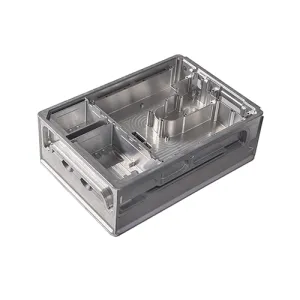
aircraft structural parts
Category: Aerospace accessoriesBrowse number: 9171Number:Release time: 2025-07-28 01:01:45Aircraft structural parts are the physical skeleton and muscles of the aircraft and are the fundamental guarantee for safe flight. From wings and fuselage skin to keel beams and frame ribs, the strength, accuracy and reliability of each structural member together define the aircraft's load capacity, fatigue life and flight performance. We focus on the precision manufacturing of aircraft structural parts. With a deep understanding of aerospace materials (such as high-strength aluminum alloys, titanium alloys, and composites) and advanced digital manufacturing technology, we ensure that every product achieves extreme lightweight while meeting the most stringent strength and durability standards. We strictly follow the AS9100 quality system and use five-axis processing, composite material lay-up, automated drilling and riveting and other processes to provide comprehensive solutions for OEM manufacturing and MRO maintenance, from key load-bearing components to complex assembly units.
News
Category:
-
[industry news]CNC Precision Parts Processing: Revolutionizing Automotive C...
2026-02-04 14:56:15 -
[industry news]The Impact of Digitalization on Impeller Engine Fabrication
2026-02-25 09:25:37 -
[industry news]CNC Precision Parts Processing for Wear-Resistant Components
2026-04-16 11:52:51
Case
Category:
No search results found!
Video
Category:
No search results found!
Download
Category:
No search results found!
Job
Category:
No search results found!
Featured Products
No search results found!



 Phone