
 Español
 Portugues
 Pусский
 Français
 Deutsch
 日本語
 한국어
 العربية
 Italiano
 Nederlands
 Ελληνικά
 Svenska
 Polski
 ไทย
 Türk dili
 हिन्दी
 Indonesia
 Melayu
 Tiếng Việt
 中文
 dansk
 Magyar
 қазақ
 বাংলা
 עִברִית
 čeština
 Soomaali
 မြန်မာ
 فارسی
 українська
 norsk
 Gaeilge
 беларускі
 Română
 Filipino
 lietuvių
 македонски
 Suomalainen
 slovenský
 o'zbek
 اردو
 հայերեն
 Igbo
 български
 سنڌي
 සිංහල
 Hrvatski
 íslenskur
 Zulu South Africa
 Afrikaans isiXhosa
 ಕನ್ನಡ
 Indonésia Sunda
 Кыргызча
 тоҷикӣ
 Србија
 Hawaii
 Cebu
 नेपाल
 latvija
 slovenija
 kiswahili
 ਪੰਜਾਬ
 پښتو
 Azərbaycan
 አማራ
 Shqipëria
 Chicheva
 ଓଡିଆ
 Setswana
 Afrikaans
 Aymara
 Башҡорт
 Türkmenler
 ትግሪኛ
 Afaan Oromoo
 অসমীয়া
 Kinyarwanda
 Ilocano
 Wolof
 अवधी
 Oluganda
 Bikol
 Fulɓe
 Kikongo
 Lingala
 རྫོང་ཁ
 Santali
 Аҧсуа
 Чӑваш
 Batak Karo

Custom module cavity machining
Custom module cavity machining is a specialized process in the manufacturing industry that involves the precise creation of cavities within modules or components. These cavities are often designed to house specific parts, facilitate fluid flow, or serve other functional purposes within a larger assembly. The process requires a high degree of precision, advanced machinery, and a deep understanding of materials and engineering principles. Key Aspects of Custom Module Cavity Machining1. Design and Engineering The process begins with detailed design and engineering. Engineers work closely with clients to understand the specific requirements of the cavity, including its dimensions, tolerances, and functional needs. Computer-aided design (CAD) software is used to create a 3D model of the cavity, ensuring that it meets all specifications and integrates seamlessly with the overall module.2. Material Selection The choice of material is critical in cavity machining. Materials must be selected based on factors such as strength, durability, thermal conductivity, and compatibility with the module’s intended application. Common materials include aluminum, steel, titanium, and specialized alloys. The material’s properties influence the machining techniques and tools used.3. Machining Techniques Custom module cavity machining employs a variety of advanced machining techniques, including CNC (Computer Numerical Control) milling, turning, and EDM (Electrical Discharge Machining). CNC milling is particularly effective for creating complex shapes and intricate details within the cavity. EDM is used for hard-to-machine materials or for achieving extremely tight tolerances. Each technique is chosen based on the cavity’s design and material.4. Precision and Accuracy Precision is paramount in cavity machining. The process often involves tolerances measured in micrometers, ensuring that the cavity fits perfectly with other components. Advanced measurement tools, such as coordinate measuring machines (CMMs), are used to verify the accuracy of the machined cavity.5. Surface Finish and Quality Control The surface finish of the cavity is crucial for its functionality, especially in applications involving fluid flow or thermal management. Techniques such as polishing, grinding, or coating may be applied to achieve the desired finish. Rigorous quality control processes are implemented at every stage to ensure the cavity meets all specifications and standards.6. Customization and Flexibility One of the defining features of custom module cavity machining is its ability to accommodate unique and complex designs. Whether the cavity is for a medical device, aerospace component, or industrial machinery, the process can be tailored to meet specific requirements. This flexibility makes it ideal for prototyping and low-volume production runs.7. Applications Custom module cavity machining is used in a wide range of industries, including aerospace, automotive, medical, and electronics. For example, in aerospace, cavities may be machined to house sensors or fuel lines, while in medical devices, they may be designed to hold delicate components or facilitate fluid pathways. Conclusion Custom module cavity machining is a highly specialized and precise process that plays a critical role in modern manufacturing. By combining advanced engineering, cutting-edge machining techniques, and rigorous quality control, it enables the creation of cavities that meet the exacting demands of diverse industries. Its ability to deliver customized solutions with exceptional accuracy and reliability makes it an indispensable part of the manufacturing landscape.
Products
Category:
-
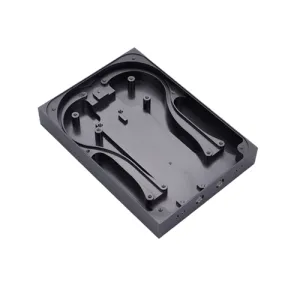
Non-standard module cavity processing
Category: New energy cavity processingBrowse number: 8401Number:Release time: 2025-07-28 18:22:38Non-standard module cavity processing specializes in machining customized and complex internal cavities for unique or irregular module designs. Using advanced CNC multi-axis technology, this process accommodates atypical shapes, sizes, and tight tolerances that standard machining cannot achieve. Ideal for aerospace, medical, electronics, and automotive applications, non-standard cavity processing ensures precision, excellent surface finish, and functional reliability for highly specialized components tailored to specific project requirements.
News
Category:
-
[industry news]How to Optimize Your Stainless Steel Parts Design for CNC Ma...
2025-08-09 15:26:03 -
[industry news]How customized processing enables lightweight hardware preci...
2025-08-25 15:10:12 -
[industry news]Selecting the Right CNC Machine for Stainless Steel Parts
2025-11-04 14:58:42 -
[industry news]Benefits of Using Multi-Axis Machining for UAV Parts
2026-03-05 14:55:26
Case
Category:
No search results found!
Video
Category:
No search results found!
Download
Category:
No search results found!
Job
Category:
No search results found!
Featured Products
No search results found!



 Phone