
 Español
 Portugues
 Pусский
 Français
 Deutsch
 日本語
 한국어
 العربية
 Italiano
 Nederlands
 Ελληνικά
 Svenska
 Polski
 ไทย
 Türk dili
 हिन्दी
 Indonesia
 Melayu
 Tiếng Việt
 中文
 dansk
 Magyar
 қазақ
 বাংলা
 עִברִית
 čeština
 Soomaali
 မြန်မာ
 فارسی
 українська
 norsk
 Gaeilge
 беларускі
 Română
 Filipino
 lietuvių
 македонски
 Suomalainen
 slovenský
 o'zbek
 اردو
 հայերեն
 Igbo
 български
 سنڌي
 සිංහල
 Hrvatski
 íslenskur
 Zulu South Africa
 Afrikaans isiXhosa
 ಕನ್ನಡ
 Indonésia Sunda
 Кыргызча
 тоҷикӣ
 Србија
 Hawaii
 Cebu
 नेपाल
 latvija
 slovenija
 kiswahili
 ਪੰਜਾਬ
 پښتو
 Azərbaycan
 አማራ
 Shqipëria
 Chicheva
 ଓଡିଆ
 Setswana
 Afrikaans
 Aymara
 Башҡорт
 Türkmenler
 ትግሪኛ
 Afaan Oromoo
 অসমীয়া
 Kinyarwanda
 Ilocano
 Wolof
 अवधी
 Oluganda
 Bikol
 Fulɓe
 Kikongo
 Lingala
 རྫོང་ཁ
 Santali
 Аҧсуа
 Чӑваш
 Batak Karo

high accuracy impeller processing
High Accuracy Impeller Processing: Precision Engineering for Optimal PerformanceImpellers are critical components in various industries, including aerospace, automotive, energy, and fluid dynamics. They are responsible for transferring energy from a motor to a fluid, enabling the movement or pressurization of liquids or gases. High accuracy impeller processing is essential to ensure optimal performance, efficiency, and longevity of the systems in which they operate. This process involves advanced manufacturing techniques, stringent quality control, and a deep understanding of material science and fluid dynamics. The Importance of High Accuracy in Impeller ProcessingImpellers operate in demanding environments where even minor deviations from design specifications can lead to significant performance issues. High accuracy processing ensures that the impeller’s geometry, surface finish, and dimensional tolerances meet exacting standards. This precision minimizes turbulence, reduces energy losses, and enhances the overall efficiency of the system. Additionally, it prevents issues such as cavitation, vibration, and premature wear, which can compromise the reliability and safety of the equipment. Advanced Manufacturing TechniquesAchieving high accuracy in impeller processing requires the use of state-of-the-art manufacturing technologies. Computer Numerical Control (CNC) machining is a cornerstone of this process, enabling the production of complex geometries with micron-level precision. Multi-axis CNC machines allow for the simultaneous machining of intricate blade profiles, ensuring consistent and repeatable results. Additive manufacturing, or 3D printing, is also gaining traction in impeller production, particularly for prototypes or customized designs. This technology allows for the creation of lightweight, optimized structures that are difficult to achieve through traditional methods. However, post-processing steps such as CNC machining or surface finishing are often required to achieve the desired accuracy and surface quality. Material Selection and ProcessingThe choice of material is crucial in high accuracy impeller processing. Materials must exhibit high strength, corrosion resistance, and thermal stability to withstand the operating conditions. Common materials include stainless steel, titanium, aluminum alloys, and advanced composites. Each material requires specific machining parameters, such as cutting speeds, feeds, and tooling, to achieve the desired precision without compromising the material’s integrity. Quality Control and TestingQuality control is a critical aspect of high accuracy impeller processing. Advanced metrology tools, such as coordinate measuring machines (CMMs) and laser scanners, are used to verify dimensional accuracy and geometric conformity. Surface roughness testers ensure that the impeller’s surfaces meet the required smoothness to minimize friction and turbulence.In addition to dimensional inspection, functional testing is often conducted to validate the impeller’s performance. This may include flow testing, vibration analysis, and stress testing under simulated operating conditions. These tests ensure that the impeller meets both design specifications and real-world performance requirements. Challenges and InnovationsHigh accuracy impeller processing presents several challenges, including the need to balance precision with cost-effectiveness and production speed. Innovations in tooling, such as advanced coatings and high-speed cutting tools, are helping to address these challenges. Additionally, the integration of artificial intelligence and machine learning into manufacturing processes is enabling predictive maintenance and real-time adjustments, further enhancing accuracy and efficiency. ConclusionHigh accuracy impeller processing is a testament to the advancements in precision engineering and manufacturing. By leveraging cutting-edge technologies, rigorous quality control, and a deep understanding of materials and fluid dynamics, manufacturers can produce impellers that deliver exceptional performance, reliability, and efficiency. As industries continue to demand higher standards, the pursuit of even greater accuracy in impeller processing will remain a driving force in engineering innovation.
Products
Category:
-
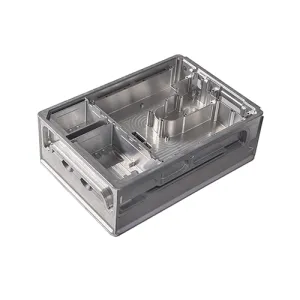
aircraft structural parts
Category: Aerospace accessoriesBrowse number: 9159Number:Release time: 2025-07-28 01:01:45Aircraft structural parts are the physical skeleton and muscles of the aircraft and are the fundamental guarantee for safe flight. From wings and fuselage skin to keel beams and frame ribs, the strength, accuracy and reliability of each structural member together define the aircraft's load capacity, fatigue life and flight performance. We focus on the precision manufacturing of aircraft structural parts. With a deep understanding of aerospace materials (such as high-strength aluminum alloys, titanium alloys, and composites) and advanced digital manufacturing technology, we ensure that every product achieves extreme lightweight while meeting the most stringent strength and durability standards. We strictly follow the AS9100 quality system and use five-axis processing, composite material lay-up, automated drilling and riveting and other processes to provide comprehensive solutions for OEM manufacturing and MRO maintenance, from key load-bearing components to complex assembly units.
News
Category:
-
[industry news]Micro-Texturing and Its Applications in Cavity Processing
2025-11-30 15:27:18
Case
Category:
No search results found!
Video
Category:
No search results found!
Download
Category:
No search results found!
Job
Category:
No search results found!
Featured Products
No search results found!



 Phone