
 Español
 Portugues
 Pусский
 Français
 Deutsch
 日本語
 한국어
 العربية
 Italiano
 Nederlands
 Ελληνικά
 Svenska
 Polski
 ไทย
 Türk dili
 हिन्दी
 Indonesia
 Melayu
 Tiếng Việt
 中文
 dansk
 Magyar
 қазақ
 বাংলা
 עִברִית
 čeština
 Soomaali
 မြန်မာ
 فارسی
 українська
 norsk
 Gaeilge
 беларускі
 Română
 Filipino
 lietuvių
 македонски
 Suomalainen
 slovenský
 o'zbek
 اردو
 հայերեն
 Igbo
 български
 سنڌي
 සිංහල
 Hrvatski
 íslenskur
 Zulu South Africa
 Afrikaans isiXhosa
 ಕನ್ನಡ
 Indonésia Sunda
 Кыргызча
 тоҷикӣ
 Србија
 Hawaii
 Cebu
 नेपाल
 latvija
 slovenija
 kiswahili
 ਪੰਜਾਬ
 پښتو
 Azərbaycan
 አማራ
 Shqipëria
 Chicheva
 ଓଡିଆ
 Setswana
 Afrikaans
 Aymara
 Башҡорт
 Türkmenler
 ትግሪኛ
 Afaan Oromoo
 অসমীয়া
 Kinyarwanda
 Ilocano
 Wolof
 अवधी
 Oluganda
 Bikol
 Fulɓe
 Kikongo
 Lingala
 རྫོང་ཁ
 Santali
 Аҧсуа
 Чӑваш
 Batak Karo

precision impeller machining
Precision impeller machining is a highly specialized process that involves the fabrication of impellers with exacting tolerances and intricate geometries. Impellers are critical components in various industrial applications, including pumps, compressors, and turbines, where they play a vital role in moving fluids or gases efficiently. The machining of these components demands advanced techniques, state-of-the-art equipment, and meticulous attention to detail to ensure optimal performance and reliability.The process begins with the selection of suitable materials, which are chosen based on the specific application and operating conditions. Common materials include stainless steel, aluminum, titanium, and high-performance alloys, each offering unique properties such as corrosion resistance, strength, and durability. The material is then carefully inspected to ensure it meets the required specifications before machining begins.CNC (Computer Numerical Control) machining is the cornerstone of precision impeller manufacturing. CNC machines are programmed with detailed CAD (Computer-Aided Design) models of the impeller, allowing for highly accurate and repeatable production. Multi-axis CNC machines are particularly well-suited for this task, as they can perform complex operations such as milling, turning, and drilling in a single setup. This capability is essential for creating the intricate blade profiles, curved surfaces, and tight tolerances that are characteristic of high-performance impellers.The machining process typically involves several stages. First, the raw material is rough-machined to remove excess material and create a basic shape. This is followed by semi-finishing and finishing operations, where the impeller’s geometry is refined to achieve the desired dimensions and surface finish. Specialized tools, such as ball-nose end mills and custom-designed cutters, are often used to machine the complex contours of the impeller blades. Additionally, advanced techniques like high-speed machining and 5-axis milling are employed to enhance precision and reduce cycle times.Surface finish is a critical aspect of impeller machining, as it directly impacts the component’s performance. Smooth surfaces reduce friction and turbulence, improving efficiency and extending the impeller’s lifespan. To achieve this, finishing processes such as polishing, grinding, or honing may be employed. In some cases, coatings or surface treatments are applied to further enhance properties like wear resistance or corrosion protection.Quality control is an integral part of precision impeller machining. Throughout the process, components are inspected using advanced metrology tools, such as coordinate measuring machines (CMMs) and optical scanners, to verify dimensional accuracy and geometric conformity. This ensures that every impeller meets the stringent requirements of its intended application.In conclusion, precision impeller machining is a sophisticated and demanding process that combines advanced technology, skilled craftsmanship, and rigorous quality control. The result is a high-performance component that delivers exceptional efficiency, reliability, and durability in even the most challenging environments.
Products
Category:
-
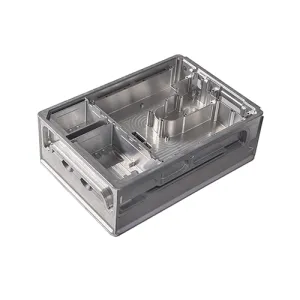
aircraft structural parts
Category: Aerospace accessoriesBrowse number: 9171Number:Release time: 2025-07-28 01:01:45Aircraft structural parts are the physical skeleton and muscles of the aircraft and are the fundamental guarantee for safe flight. From wings and fuselage skin to keel beams and frame ribs, the strength, accuracy and reliability of each structural member together define the aircraft's load capacity, fatigue life and flight performance. We focus on the precision manufacturing of aircraft structural parts. With a deep understanding of aerospace materials (such as high-strength aluminum alloys, titanium alloys, and composites) and advanced digital manufacturing technology, we ensure that every product achieves extreme lightweight while meeting the most stringent strength and durability standards. We strictly follow the AS9100 quality system and use five-axis processing, composite material lay-up, automated drilling and riveting and other processes to provide comprehensive solutions for OEM manufacturing and MRO maintenance, from key load-bearing components to complex assembly units.
News
Category:
-
[industry news]Benefits of CNC in customized processing of hardware precisi...
2025-09-12 15:19:19 -
[industry news]Stainless Steel Machining for Oil & Gas Equipment
2025-09-27 14:56:16 -
[industry news]Key technologies in customized hardware precision parts proc...
2025-11-18 15:17:13
Case
Category:
No search results found!
Video
Category:
No search results found!
Download
Category:
No search results found!
Job
Category:
No search results found!
Featured Products
No search results found!



 Phone